

An Education in Horror
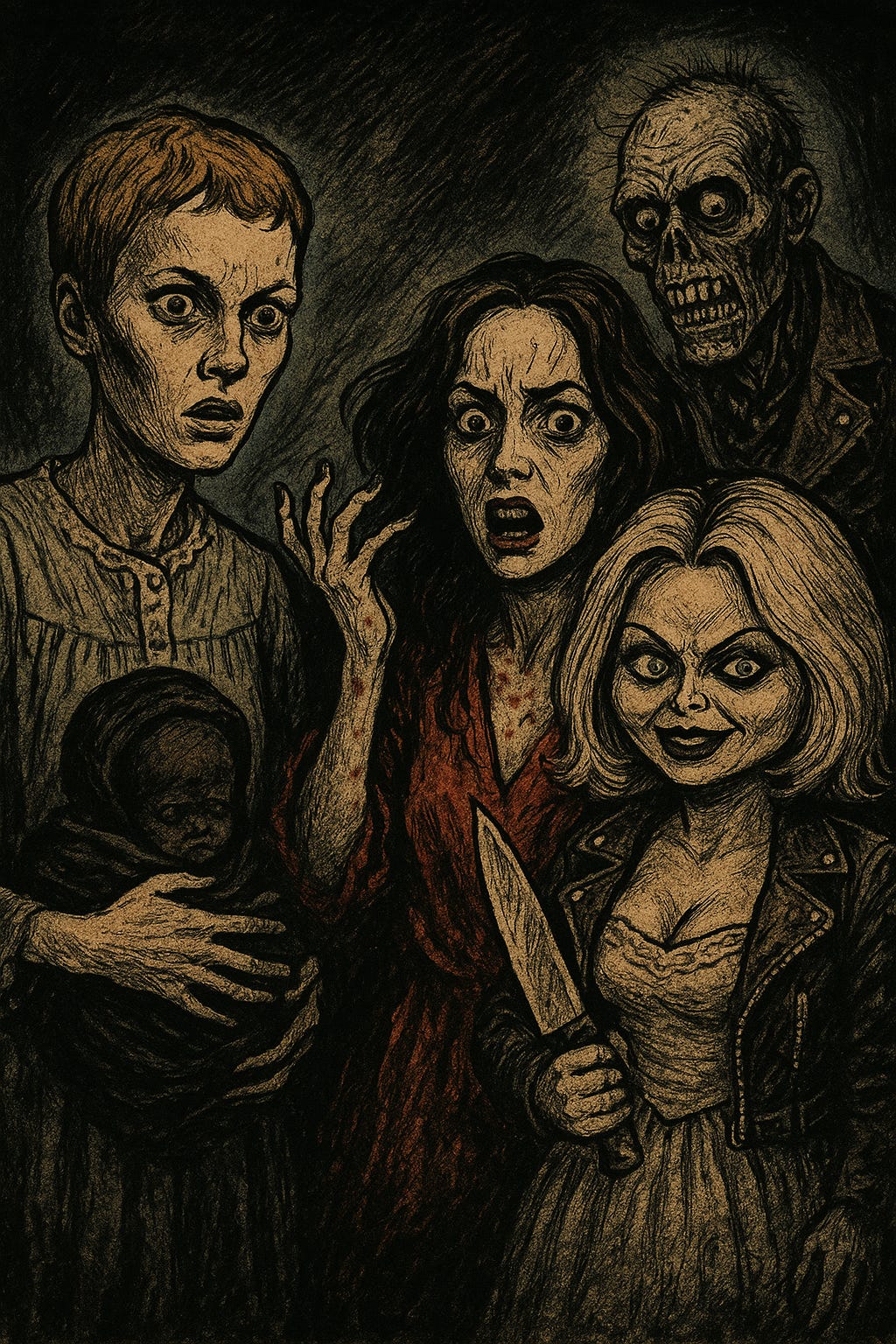
We love horror, but somehow missed a few of the greats. From Rosemary’s Baby to Suspiria, here’s what happened when we finally watched some of the genre’s most iconic films.

We’re big horror fans, clearly.
But up until a few months ago there were some huge gaps in our horror catalogue. Classics we hadn’t watched that made us feel like frauds. We’re changing that one film at a time and here, we’re sharing the highlights.
Why classic horror now?
The catalyst to our further education in horror has come about thanks to a rediscovering of physical media. We’ve started collecting 4k physical copies of some of our absolute favourite movies, as well as picking up fantastic high quality classics.
One of the benefits we’ve found with starting to collect physical media again is the additional information we’ve learned as we’ve done so. The extras included on the 4Ks is awesome, but we’ve found we’re more interested to learn about how the movies were made and insights behind them. This leads me to our first new classic watch…
Suspiria (1977): A Feast for the Eyes and Ears
We used to be people who watched a film and didn’t think too much about how it was made or what it was trying to say. But Suspiria changes that. Watching Dario Argento’s original 1977 version, it’s impossible not to be drawn into the making of it. The saturated colours are electric, almost delirious. The eerie Goblin score, relentless and unsettling, feels like it seeps into your bones. And the dance school setting? Absolutely perfect: beautiful, uncanny, and deeply claustrophobic.
Suspiria isn’t just a horror film. It’s an experience. A film that reminds you that horror can be visual art, atmosphere, and sound design all working together to disorient you in the best way possible.
The Return of the Living Dead (1985): Punk, Panic, and Pure Horror Comedy
Pure horror comedy at its finest. A great big nod to George Romero’s Night of the Living Dead, this film delivers everything a horror fan could want in gloriously excessive bucketfuls: brain-eating zombies, naked fear (literally), and chaos that somehow manages to feel both silly and genuinely tense. If a talking half zombie strapped onto a table and an 80s soundtrack sound like fun, this is for you.
It’s brash, it's bloody, and it doesn’t care about rules - either of filmmaking or of zombie lore. The characters are frantic, the humour is funny, and the energy is infectious. If Night of the Living Dead was the birth of modern zombie horror, The Return of the Living Dead is its punk rock teenage rebellion.
The Omega Man: Eerie, Raw and with a Memorable Score
Reviewed by Andy, The Crypt Cabinet contributor
Some films from childhood remain etched in memory, not for their plots or characters, but for the atmosphere they create. The Omega Man was one of those for me. I first saw it in the early 1980s, probably around eight years old. I didn’t fully understand what was going on at that age, but certain things stuck: eerie images of a deserted city, the strange, hooded figures, and, most of all, the music, catchy and haunting in equal measure. As the years rolled by, I lost touch with the story itself, but the emotional residue stayed with me. Recently, with my partner in tow, I decided to revisit this post-apocalyptic classic, and I was surprised by how much it still resonated.
The Omega Man, based loosely on Richard Matheson’s 1954 novel I Am Legend, takes some liberties with the source material. If you've seen the Will Smith version, that one sticks closer to Matheson’s original vision. In contrast, The Omega Man goes its own way, but the central idea remains: the last man alive in a world devastated by plague, grappling not just with survival, but with meaning. Charlton Heston plays Dr. Robert Neville, a man immune to a man-made virus that has wiped out most of humanity and turned the rest into light-sensitive, cult-like mutants called “The Family.” Neville roams the empty streets of Los Angeles by day, hunting for supplies and hoping, against all odds, to find someone else like him. Those empty LA streets still hit hard today. They’re bleak, sunlit, and unsettling, yet probably still more inviting than the overstimulated digital age we live in now, filled with mobile phones, clickbait, and keyboard warriors!
Heston carries much of the film solo, especially in the first half, talking to mannequins and himself. Watching it again as an adult, the film takes on a new meaning. What scared me as a child now feels melancholic, even poetic. Neville is part action hero, part philosopher, part man on the edge. His loneliness is tangible. One moment that really stood out was him watching Woodstock in a deserted cinema, mouthing along to the dialogue as if trying to tether himself to a world that's long gone. You really feel the ache of nostalgia in that scene, not just for the character, but for the era the film itself came from.
The soundtrack, by Ron Grainer (fun fact: he also composed the Doctor Who theme), is just as memorable as I remembered. It veers from upbeat, jazzy interludes to sparse, haunting motifs that mirror Neville’s mental state. As with Doctor Who, Grainer had a knack for putting sound to emotion, he could make music creep under your skin.
Visually, the film is classic 70s cinema. Shot on 35mm film it has that warm, textured look that modern digital often lacks. The sunlight feels harsher, the shadows deeper. There’s a quiet intimacy to the way Los Angeles is portrayed, alive and yet utterly lifeless. With today’s high-definition transfers, it’s never looked better. Some parts are dated, the fashion, the slang, but there’s a raw emotional core that still hits. The Family, led by Matthias (Anthony Zerbe), aren’t just villains; they’re a warped mirror of humanity’s fear of change, progress, and the consequences of its own making.
We also particularly liked how, with many films from the 60s, 70s and 80s, it’s not a slick production. Cameras sometimes seem shaky, a deserted LA actually has the odd car or person far off in the distance (not intentionally!) and the overall feel is more intimate and real.
Rewatching The Omega Man wasn’t just about nostalgia, it reminded me of a different pace, a different mood, and a different kind of storytelling. It lingers, just as it did all those years ago. And in its quiet, strange way, it still has something to say.
Highly recommended.
Rosemary’s Baby (1968): Haunting, Psychological Horror That Still Terrifies
Yes, I know, how can we call ourselves horror fans if we’ve not seen Rosemary’s Baby? Well, thankfully, we righted that wrong a few weeks ago and here are our thoughts.
Rosemary’s Baby, the book, was the start of a plethora of Satan/Devil related horror content in the 70s and 80s. If you’ve not picked up Grady Hendrix’s ‘Paperbacks from Hell’ you should. The first chapter covers the obsession readers had, after the release of Rosemary’s Baby, along with The Exorcist and The Other, of anything Satan-adjacent.
Mia Farrow plays the role brilliantly and the tension builds throughout the film as Mia, as Rosemary, begins to feel concerned about her husband’s relationship with their somewhat interfering neighbours.
As the film unravels, so does Rosemary’s sense of safety, and that creeping paranoia becomes almost unbearable by the final act. You know something’s wrong, but you’re kept just off-balance enough that you question whether it’s all in her head, until it very much isn’t.
The final scene is quietly horrifying. After all the gaslighting, the invasive medical appointments, the strange tannis root, and the nightmarish pregnancy, Rosemary finds herself in front of the coven… and the baby. Her baby. The son of Satan. The moment she starts to rock the cradle, with her maternal instinct seemingly overriding everything, is chilling not because it’s loud or gory, but because it’s so quiet.
It’s horror that leaves you sitting in the aftermath, uncomfortable and unsure. And isn’t that the best kind?
Watching Rosemary’s Baby now, after years of hearing it referenced and revered, felt like ticking off a rite of passage as a horror fan.
Bride of Chucky (1998): Camp, Chaos, and a Killer Leading Lady
Okay, this one might not fall under the traditional “classic horror” umbrella, but when I say this movie delivered everything I wanted, I’m not exaggerating. Child’s Play became a firm favourite when I first watched it a few years ago (my partner had loved it since he was younger), and the Chucky TV series only deepened my affection. It cemented Jennifer Tilly’s Tiffany as one of my all-time favourite female characters; right up there with Mia Goth’s Pearl, Carrie-Anne Moss as Trinity, and Jennifer Carpenter as Deborah Morgan.
So when I finally watched Bride of Chucky, I had high expectations, and every single one of them was fulfilled.
This film is pure, delicious camp: violent, stylish, funny, and led by a female character who oozes charisma and chaos in equal measure. This film is a reminder that horror doesn’t always have to be serious, subtle or have a deep meaning; sometimes it can just be outrageous and fun. Bride of Chucky is a love letter to horror’s theatrical side, and Tiffany is an icon in fishnets.
So there we have it…
A roundup of some of the films we’ve been watching recently. Next up, The Wicker Man, An American Werewolf in London, Night of the Living Dead…and more. We’ll keep you updated on our horror education, and if you think of any films we simply must watch, let us know! We have, despite these obvious glaring holes, seen a good number of classics already, and The Shining is up there with one of our all time favourites, but you might just know some we’ve not heard of, so leave a comment and we’ll add it to the list.